The Complete Beginner's Guide to RV Camping in 2026
This article may contain affiliate links. If you make a purchase through these links, we may earn a small commission at no extra cost to you. This helps us keep creating free content.

Standing in a dusty RV lot for the first time is overwhelming. Class A, Class B, Class C, fifth wheel, travel trailer, pop-up, teardrops. It feels like buying a house on wheels with no idea where to start. Plenty of first-timers test-drive a Class B camper van on a whim, fall in love with it during a rainy weekend somewhere like Rocky Mountain National Park, and never look back.
If you're where we were back then, this guide is for you. No jargon dumps, no assuming you know what a "shore power hookup" means. Just the honest stuff we wish someone had told us before that first trip.
Which RV Type Is Right for You?
Before you spend a single dollar, you need to understand what's out there. RVs come in two big families: motorized (they drive themselves) and towable (you pull them with your truck or SUV). Here's the breakdown:
Motorized RVs
Class A, Think tour bus. These are the biggest, most expensive rigs on the road. They can be 30-45 feet long with full kitchens, bathrooms, and slide-outs that expand the living space. Great for full-timers or retired couples on long-haul trips. Budget: $80,000-$300,000+ new.
Class B, A converted van. This is what we drive. They're the smallest motorized RVs (usually 17-23 feet) and the easiest to maneuver. You can park them in a normal parking spot, drive through a fast-food lane, and take them on mountain roads that would terrify a Class A owner. The trade-off? Less space. Budget: $60,000-$180,000 new, $30,000-$80,000 used.
Class C, The middle child. Built on a truck chassis with a cab-over sleeping area that hangs over the driver's cabin. They offer more space than a Class B but are easier to drive than a Class A. A popular choice for families. Budget: $50,000-$150,000 new.
Towable RVs
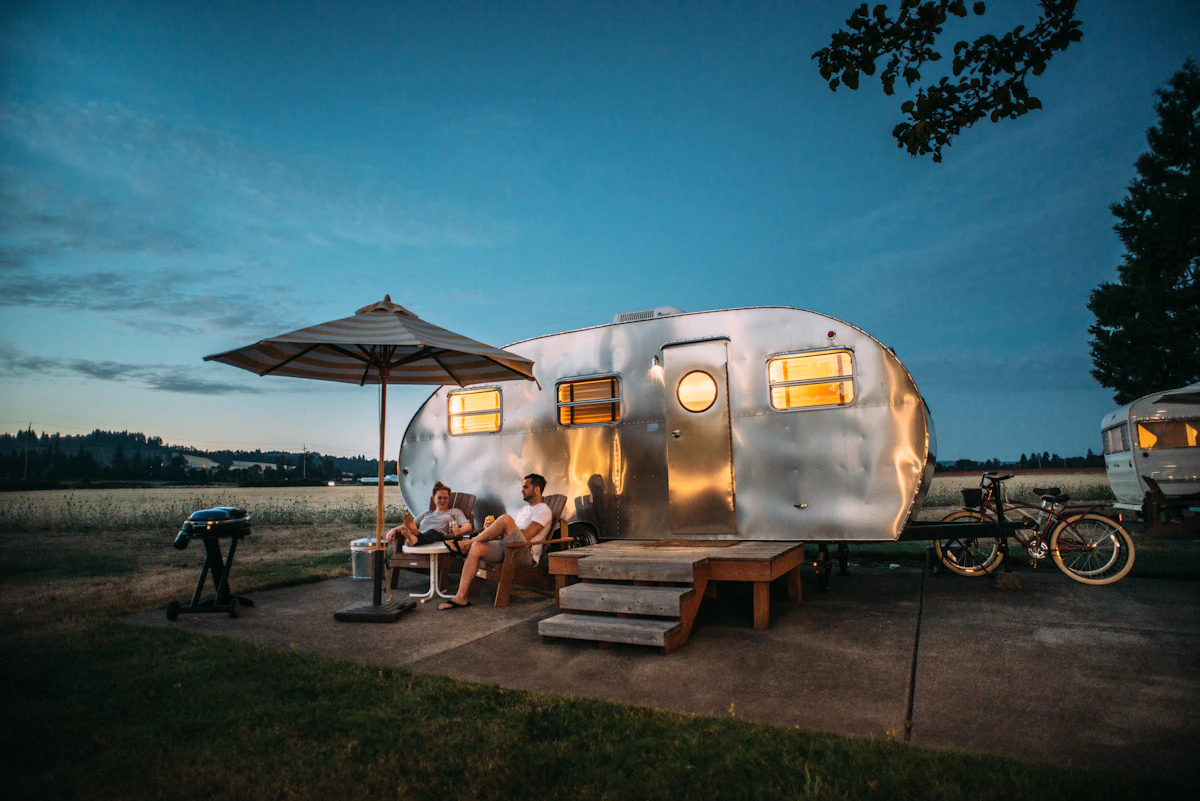
Travel trailers are the most popular towable option. They hitch to your vehicle's receiver and come in sizes from 12 feet (basically a bed on wheels) to 35+ feet (full apartment). The huge advantage is that once you set up camp, you can unhitch and use your truck for day trips.
Fifth wheels hitch into the bed of a pickup truck via a special mount. They're incredibly stable to tow and often have two stories of living space. If you have a full-size truck and want maximum comfort, this is the way to go.
Pop-ups and teardrops are lightweight, affordable, and easy to tow with smaller vehicles. Pop-ups fold down for towing and expand into a tent-like sleeping area at camp. Teardrops are tiny, aerodynamic trailers with a bed and sometimes a small galley kitchen in the rear hatch.
Essential Gear for Your First Trip
🎒 Free Tool: Campsite Packing List
Choose your trip type, season, and group size, get a custom packing checklist you can share with your whole crew.
Build My Packing List →Your RV comes with the basics, but there's a list of things you'll need that nobody tells you about until you're standing at a campsite without them.
- Water pressure regulator (campground water can blow your lines)
- Drinking water hose (NOT a garden hose, which contains lead)
- Sewer hose kit with clear elbow connector
- Leveling blocks (your fridge needs to be level to work properly)
- Wheel chocks (prevent rolling while parked)
- Surge protector for your electrical hookup
- Basic tool kit (screwdrivers, pliers, duct tape, zip ties)
- First aid kit
- Headlamp or flashlight for nighttime hookup arrivals
Understanding Campground Hookups
When you book a campsite, you'll see terms like "full hookup," "partial hookup," and "dry camping." Here's what they actually mean:
Full hookup means your site has water, electricity (usually 30-amp or 50-amp), and a sewer connection. You plug in, hook up your hoses, and live like you're at home. This is the easiest option for beginners.
Partial hookup typically means water and electric but no sewer. You'll need to use your holding tanks and dump them at the campground's dump station when they're full.
Dry camping (boondocking) means no hookups at all. You rely on your fresh water tank, battery power, and potentially solar panels. This is where the freedom really kicks in, but it requires more planning and self-sufficiency.
Driving Tips That Save Your Sanity
Driving an RV is not like driving your car. Here are the things that tripped us up early on:
Take turns wide. Your rear wheels track inside your front wheels, which means you'll clip curbs and cut corners if you turn like a car. Swing wide on every turn.
Brake earlier than you think. An extra 5,000-15,000 pounds behind you means much longer stopping distances. Start braking earlier and lighter. Aggressive braking wears your brakes fast and terrifies the family.
Check your height. Know your roof height and write it on a sticky note on your dashboard. Gas station overhangs, drive-throughs, and tree branches are your enemies. We once watched a Class A rip off its entire AC unit on a low bridge. Heartbreaking.
Use a backup camera. If your RV didn't come with one, buy a wireless one for $100. It will save you from backing into posts, trees, and other RVs. Trust me on this one.
The 5 Biggest Beginner Mistakes
1. Overpacking. You don't need your entire kitchen. Pack light, see what you actually use on your first trip, and adjust from there.
2. Not leveling the RV. An unlevel RV means your fridge might not work, your doors swing open or closed by themselves, and sleeping on a slope is miserable. Spend five minutes with leveling blocks and a bubble level.
3. Forgetting to retract slides and antennas before driving. Put a pre-departure checklist on your steering wheel. Seriously. We've heard horror stories.
4. Arriving at camp after dark. Setting up in the dark is stressful and error-prone. Plan to arrive at least two hours before sunset for your first few trips.
5. Trying to do too much. Your first RV trip should be short, close to home, and low-pressure. A campground 2-3 hours away with full hookups is perfect. Save the cross-country epic for later.
Ready to Roll?
RV camping has this wonderful way of making everything simpler. No airport security, no hotel checkout times, no restaurant reservations. Just you, the road, and whatever view you decide to wake up to tomorrow. It's not always glamorous, but it's always worth it. Start small, learn as you go, and don't let the gear lists and jargon intimidate you. Every experienced RVer was a nervous beginner once.
Use our RV Trip Cost Calculator to estimate your first trip's budget, and check out our Camping Gear Checklist to make sure you don't forget anything important.
Published by the My Camper Friend editorial team. Published March 18, 2026. Updated September 12, 2026.
Editorial responsibility: see Imprint.
Spotted an error or have something to add? corrections@mycamperfriend.com
📖 All articles on My Camper Friend →
Browse our other articles
Campsite Tips & Gear Picks
New guides, campground reviews, and adventure ideas — delivered to your inbox.
🎁 Free bonus: RV Trip Packing Checklist (PDF)
You might also like
First Solo Camping Trip: What to Know Before You Go
Going camping alone for the first time can feel intimidating. Here is what actually matters on a first solo trip, and what does not.

How to Back Up an RV: Step-by-Step for Nervous Beginners
Backing up an RV terrifies most new owners. This step-by-step guide breaks down mirrors, spotter signals, and practice drills so you can reverse with confidence.
The Unwritten Rules of Campground Etiquette (From Someone Who's Broken Most of Them)
Nobody hands you a rulebook when you pull into a campground. Here are the unspoken etiquette norms that keep everyone happy — learned mostly through embarrassing mistakes.